

Why People Buy From Businesses They Recognize
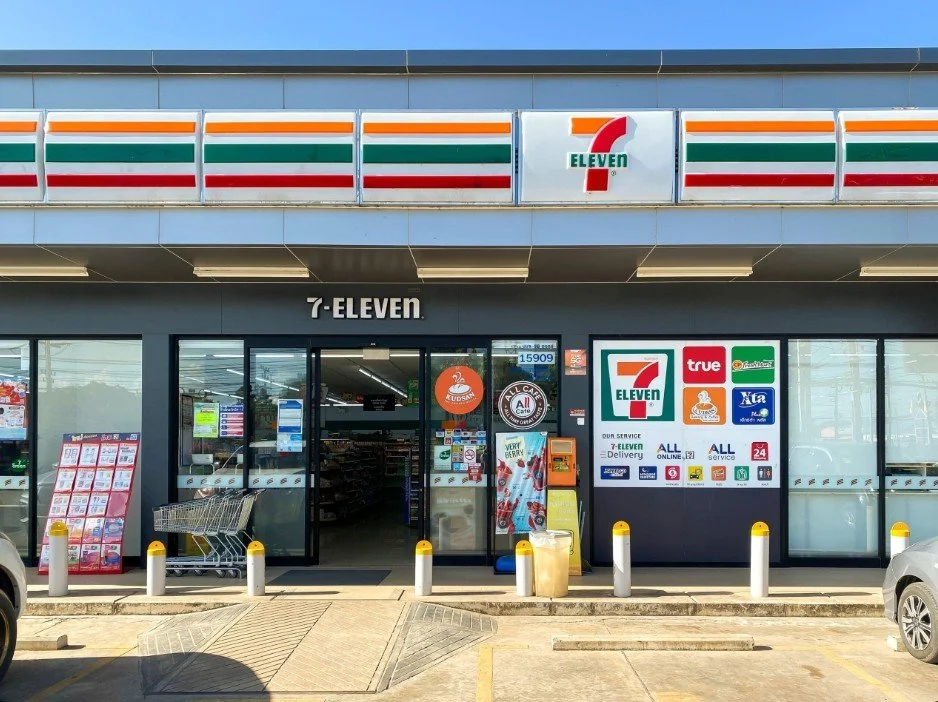
A recognizable retail storefront immediately communicates the core concept behind the article: customers frequently encounter business names, logos, signage, colors, and other brand elements long before they are ready to make a purchase. Repeated exposure can make a business easier to recall when a buying need arises, illustrating the connection between brand recognition, familiarity, consumer consideration, and purchasing behavior.
By PWDR MEDIA News Desk
There is a moment in almost every buying decision when a customer is confronted with something businesses routinely underestimate: uncertainty. They need a plumber, restaurant, contractor, insurance company, marketing agency, clothing brand or piece of equipment, and suddenly there are dozens of options competing for the same decision. Some have better prices. Some have more reviews. Some appear first on Google. Others have advertisements scattered across social media. Yet somewhere among those choices is usually a business the customer has encountered before. Maybe they have driven past its sign for years. Maybe its name appeared repeatedly while searching Google. Maybe they watched one of its videos months ago, saw its truck in their neighborhood, noticed a friend following it on Instagram or simply remember its logo from an advertisement they barely paid attention to. The customer might not even remember exactly where the recognition came from. They simply know the name.
That seemingly insignificant advantage can become extraordinarily important when the customer finally needs to make a purchase.
People do not necessarily buy from businesses they recognize because recognition proves that a company is better. It does not. Familiar companies can provide terrible service, and unknown companies can provide exceptional service. What recognition can do, however, is remove one of the first barriers standing between a business and a potential customer: unfamiliarity. When someone encounters a company they recognize, they are no longer starting the relationship completely from zero. Something has already been established in memory. The name means something. The logo looks familiar. The customer remembers seeing the business somewhere before. And in a marketplace where consumers are surrounded by more choices than they can realistically investigate, being remembered can determine whether a business receives serious consideration at all.
That is the overlooked value of brand recognition. Marketing is often evaluated according to what happened immediately after someone saw an advertisement: Did they click? Did they call? Did they purchase? But many of the impressions that eventually contribute to a sale happen long before the customer is ready to buy anything. McKinsey's research into the consumer decision journey found that people accumulate impressions of brands through advertisements, conversations, product experiences, news and other touchpoints before entering the market. When something finally triggers a purchase, those accumulated impressions help form what McKinsey calls the "initial consideration set"—the relatively small group of brands customers think about when they begin shopping. The original research is available at https://www.mckinsey.com/capabilities/growth-marketing-and-sales/our-insights/the-consumer-decision-journey.
That changes how businesses should think about marketing. The advertisement someone sees today may not produce a customer today. The social media post may not generate an immediate lead. The company truck someone notices in traffic might appear impossible to measure. A useful article may be read and forgotten. Yet those encounters are not necessarily wasted. They can become pieces of memory that matter later, when the person finally has a reason to buy.
Recognition Gets Businesses Into the Conversation
Consider what happens when your furnace stops working on a freezing morning. You search for HVAC companies and receive page after page of results. Most of the businesses are complete strangers. Then one name catches your attention.
You've seen that company before.
Maybe you cannot remember where. Perhaps one of its vehicles regularly drives through your neighborhood. Maybe you have seen its Google advertisements. Maybe somebody mentioned it. Whatever created the recognition, the company suddenly occupies a different position from the businesses surrounding it.
You know almost nothing about fifteen companies.
You know something about this one.
That does not automatically win the sale, but it can win something that comes first: consideration.
McKinsey's consumer decision research demonstrated just how valuable that position can be. Its study of almost 20,000 consumers across multiple industries and continents found that brands included in a consumer's initial consideration set could be up to three times more likely to ultimately be purchased than brands that were not initially considered. Later McKinsey analysis similarly found that 69% of brands purchased by consumers who switched brands had already been present in their initial consideration set. Those findings can be reviewed at https://www.mckinsey.com/capabilities/growth-marketing-and-sales/our-insights/the-consumer-decision-journey and https://www.mckinsey.com/capabilities/growth-marketing-and-sales/our-insights/the-new-battleground-for-marketing-led-growth.
This is one reason brand awareness should not be dismissed as a vanity metric. Recognition is not the same as revenue, but a business customers cannot remember faces an obvious problem when purchasing begins.
People cannot consider a business they do not know exists.
Familiarity Makes an Uncertain Decision Feel Less Foreign
The psychological relationship between familiarity and preference has been studied for decades. One of the best-known concepts is the "mere exposure effect," associated with psychologist Robert Zajonc's work on how repeated exposure can influence attitudes toward stimuli. The principle is frequently simplified in marketing discussions into "people like things because they see them repeatedly," but real purchasing behavior deserves more nuance than that. Repetition does not magically make a bad company desirable, nor does showing customers the same advertisement endlessly guarantee affection.
What familiarity can accomplish is make something feel less novel.
That distinction matters.
A consumer comparing businesses is dealing with imperfect information. They usually cannot inspect a contractor's workmanship before hiring them. They cannot know exactly how an attorney will handle their case. They cannot taste a restaurant's food before deciding where to eat that evening. They cannot know whether a marketing agency will produce results before signing the contract. Buying therefore involves prediction, and prediction creates uncertainty.
Recognition gives the brain another piece of information to work with.
Ipsos has observed this effect in consumer research involving brands and new products. Its research found that when consumers were familiar with a brand and viewed it positively, they were more willing to try a new product associated with that brand. Ipsos describes a reputable brand name as providing familiarity and confidence around the promise of the product. Its discussion of the research is available at https://www.ipsos.com/en-us/knowledge/consumer-shopper/first-impressions-matter.
The qualification in that finding is crucial: familiarity works alongside perception.
Being known is not enough.
Being known for something worthwhile is considerably more powerful.
Recognition and Trust Are Not the Same Thing
This is where conversations about brand awareness sometimes go wrong. Recognition is frequently treated as though it automatically produces trust.
It does not.
Consumers recognize businesses they dislike. People remember advertisements that annoy them. Companies can become famous because of scandals, poor service or bad products. Recognition means a business occupies space in someone's memory; it says nothing by itself about what is stored there.
The real objective is therefore not simply becoming recognizable.
It is becoming recognizable and associated with the right things.
Kantar's extensive brand research makes a similar distinction through its Meaningful, Different and Salient framework. Salience refers to whether a brand comes readily to mind in a buying situation, while meaningfulness and difference concern what the brand represents to consumers and how it stands apart. Kantar's research argues that salience matters, but salience by itself is insufficient for sustainable growth. Its analysis found that only about one-quarter of the growth brands it examined were able to grow through increased salience alone; those brands already possessed stronger underlying perceptions of meaningfulness and difference. The research can be found at https://www.kantar.com/north-america/inspiration/brands/brands-need-to-build-more-than-just-salience-to-grow.
This should matter enormously to small and midsize businesses.
The objective of local marketing should not be to make everyone recognize your logo. The objective is to build a recognizable identity around something customers value.
A contractor might become known for meticulous work.
A restaurant might become associated with a particular atmosphere.
A realtor might become recognized for knowledge of a specific community.
An outdoor company might become associated with people who actually participate in the activities it serves.
A marketing company might become known for educating business owners instead of hiding basic marketing knowledge behind confusing language.
Recognition becomes commercially useful when customers can attach meaning to it.
Why Repeated Marketing Can Work Even When Nobody Clicks
Digital marketing has created an understandable obsession with immediate measurement. Businesses can see impressions, clicks, conversions, calls, form submissions, cost per lead and return on advertising spend. Those measurements are enormously valuable because they help companies understand where money is working.
The danger comes when businesses begin believing that anything that cannot be connected directly to a conversion produced no value.
Human memory does not operate according to an advertising dashboard.
Imagine a homeowner who sees a local landscaping company's Instagram video in March. They do not need landscaping, so they scroll past it. In April, they drive behind one of the company's trucks. In May, a neighbor mentions having work completed by the company. In June, another video appears. In July, they decide their backyard needs to be redesigned.
Which impression generated the customer?
The honest answer may be all of them.
By the time the homeowner searches for landscapers, the company no longer feels completely unknown. The customer recognizes the name, remembers seeing its work and perhaps vaguely associates it with somebody in the neighborhood. A Google result that would have looked like another anonymous company four months earlier now feels familiar.
Kantar describes modern consumers as living within a web of brand connections, with people encountering brands in countless small ways throughout everyday life. Clicks, searches, webpage visits, referrals, reviews, consumption and packaging all contribute potential connections between people and brands. Its discussion of how these accumulated connections contribute to brand equity can be found at https://www.kantar.com/inspiration/brands/what-is-the-meaningful-different-salient-framework.
This does not mean businesses should stop measuring marketing.
It means they should stop assuming the only marketing that works is the marketing they can trace perfectly.
Customers Rarely Begin Their Research With Every Possible Option
The internet gives consumers access to an almost unlimited number of businesses. In theory, someone purchasing a product or service could systematically investigate every available company, compare every price, read every review and objectively identify the statistically optimal choice.
Nobody has time for that.
Customers narrow the field.
Recognition can help determine which businesses survive that first cut.
McKinsey revisited its consumer decision research in a later discussion and reported that roughly 70% of brands eventually chosen for purchase came from the initial consideration set. The researchers emphasized that awareness alone was not enough; consumers also needed to understand something about the value proposition of the brand. The discussion is available at https://www.mckinsey.com/capabilities/growth-marketing-and-sales/our-insights/driving-business-growth-by-zeroing-in-on-the-consumer-decision-journey.
That finding helps explain why businesses can struggle even when their product is objectively competitive.
The problem may occur before the comparison begins.
A company cannot win a comparison it never enters.
This is especially important in markets crowded with functionally similar competitors. There may be dozens of plumbers capable of replacing the same water heater, hundreds of real estate agents able to list a property and countless companies offering web design. Customers need some mechanism for reducing those options to a manageable number.
Recognition helps accomplish that.
Distinctive Brands Are Easier to Remember
Being visible repeatedly is only part of building recognition. Customers also need to recognize what they are seeing.
This is where consistency matters.
Businesses frequently change logos, colors, messaging, photography styles and advertising formats because they become bored with their own marketing. Customers, however, see only a fraction of what the company sees internally. The business owner who has looked at the same logo 4,000 times may be tired of it just as customers are beginning to recognize it.
Consistency helps separate one company from another.
Colors, logos, typography, phrases, photography, uniforms, vehicle graphics, packaging, spokespersons, sounds and even communication styles can become recognizable brand assets when they are used consistently enough.
Kantar's research discusses these mental associations as shortcuts to brand meaning, pointing to recognizable visual, verbal and auditory assets that allow consumers to identify brands quickly. Importantly, Kantar again cautions that instant recognition alone does not guarantee selection; those recognizable assets work most effectively when connected with meaningful brand equity. The research is available at https://www.kantar.com/inspiration/brands/get-an-equity-booster-how-meaningful-difference-supercharges-growth.
For a local business, this does not require a multinational advertising budget.
It requires discipline.
The same business name.
The same visual identity.
The same general voice.
The same promise.
The same standard of professionalism.
Over time, repetition builds familiarity, and consistency helps customers understand what they are supposed to remember.
Recognition Becomes More Powerful When Other People Confirm It
There is a major difference between recognizing a business solely because of advertising and recognizing it while also discovering evidence that other people trust it.
This is where brand awareness begins interacting with reputation.
A customer searches for a business they recognize and discovers hundreds of positive reviews. They visit the website and see years of completed work. They notice that the company is active in the community. A friend says, "Oh yeah, I've heard of them." A neighbor has used them before.
Each signal reinforces the others.
The advertisement created recognition.
The reviews supplied evidence.
The website supplied information.
The recommendation supplied social confirmation.
The customer's uncertainty begins shrinking.
McKinsey's original consumer decision research found that during active evaluation, consumer-driven activities—including online reviews and recommendations from friends and family—accounted for two-thirds of the touchpoints it identified in that stage. This is an older study and purchasing behavior has continued evolving since then, but the underlying observation remains useful: businesses do not control the entire conversation customers use to make decisions. The research is available at https://www.mckinsey.com/capabilities/growth-marketing-and-sales/our-insights/the-consumer-decision-journey.
Strong marketing therefore does not attempt to manufacture trust out of thin air.
It makes genuine evidence easier to find.
Local Businesses Have an Advantage They Often Ignore
Large companies can spend millions making themselves familiar. Local businesses possess another tool: physical presence.
A local business can become recognizable because people repeatedly encounter it within their everyday environment.
They see the trucks.
They see the building.
They see employees wearing the company logo.
They see sponsored events.
They see projects being completed.
They see yard signs.
They see social posts from locations they recognize.
They hear friends mention the company.
They notice the business appearing repeatedly when searching for services nearby.
That creates a form of familiarity national competitors can sometimes struggle to replicate authentically.
For a Colorado company, this could mean demonstrating actual knowledge of Colorado rather than simply putting mountains in a logo. A contractor can talk intelligently about local building conditions. An outdoor business can show that its employees actually participate in the outdoor community. A restaurant can become intertwined with the town it serves. A service company can highlight recognizable neighborhoods and customers.
The objective is not merely to say, "We're local."
It is to become part of the landscape customers recognize.
Recognition Reduces the Distance Between Marketing and Sales
One of the hardest sales calls is introducing a business the prospect has never heard of.
The salesperson must explain who the company is, establish credibility, demonstrate relevance, overcome skepticism and eventually present an offer.
Brand recognition shortens that introduction.
"Oh, I've seen you guys before."
That sentence may sound trivial, but it represents marketing doing part of the sales team's work before the conversation started.
The customer may still need convincing. They may still compare prices. They may still choose a competitor. But the salesperson is no longer introducing a completely foreign organization.
Kantar's analysis of brand equity describes salience as a brand coming quickly to mind during a purchase situation and reports that brands combining salience with meaningfulness and difference can capture more volume and support stronger pricing power than brands lacking those characteristics. Its overview is available at https://www.kantar.com/inspiration/brands/why-and-how-should-you-measure-brand-equity.
That is one reason brand building and lead generation should not be treated as competing strategies.
They can strengthen one another.
Performance marketing captures existing demand.
Brand marketing helps determine whose name customers remember when that demand appears.
Recognition Cannot Rescue a Bad Business
There is an important boundary to everything discussed here.
Marketing cannot permanently compensate for a company that disappoints customers.
Recognition gets businesses considered. Experience determines what recognition eventually means.
A restaurant can advertise aggressively enough that everyone in town recognizes its name. If the food consistently disappoints customers, recognition eventually carries negative information. A contractor can cover a city with trucks and advertisements, but poor workmanship can transform visibility into notoriety. A company can dominate Google Ads while accumulating reviews warning customers to stay away.
Being remembered is valuable only when what people remember helps the business.
Kantar's analysis provides an instructive warning here as well. Its brand equity research notes examples of historically famous companies that retained high levels of salience while losing other qualities necessary for growth. Fame alone was not enough to protect them. Kantar reports that stronger combinations of meaningfulness, difference and salience are associated with better commercial outcomes than salience in isolation. See https://www.kantar.com/inspiration/brands/get-an-equity-booster-how-meaningful-difference-supercharges-growth and https://www.kantar.com/inspiration/brands/brand-equity-why-and-how-should-you-measure-it.
Recognition opens the door.
The business still has to deserve the customer who walks through it.
The Businesses People Remember Are the Businesses That Get a Chance
The greatest misunderstanding about brand awareness is expecting it to behave like direct-response advertising.
Businesses run a campaign and ask, "How many sales did we get?"
That is an important question.
It simply is not the only one.
Another question is whether more people will recognize the company when they need what it sells.
A person may encounter a business twenty times without taking action because they have no reason to buy. Then one day circumstances change. The roof leaks. The car breaks down. Their company needs a new website. They decide to sell their home. They need an attorney. They want somewhere to eat. They finally need the service that has quietly appeared in front of them for months.
At that moment, marketing from the past suddenly becomes relevant.
The unfamiliar businesses begin from zero.
The recognizable business does not.
That is the real commercial power of recognition.
It does not hypnotize customers into buying. It does not eliminate competition. It does not guarantee trust, and it certainly does not replace delivering a good product.
It gives a business a place in the customer's mind before the buying decision begins.
And in crowded markets, sometimes earning that place is the difference between being compared and being ignored.
Businesses therefore should not ask only whether customers are seeing their marketing. They should ask whether customers are beginning to remember who they are, understand what they do and associate the company with something worth remembering.
Because when the moment to buy finally arrives, customers cannot choose every business.
They begin with the ones that come to mind.
And recognition is often how a business gets there.
Sources
McKinsey & Company — The Consumer Decision Journey
https://www.mckinsey.com/capabilities/growth-marketing-and-sales/our-insights/the-consumer-decision-journey
McKinsey & Company — The New Battleground for Marketing-Led Growth
https://www.mckinsey.com/capabilities/growth-marketing-and-sales/our-insights/the-new-battleground-for-marketing-led-growth
McKinsey & Company — Driving Business Growth by Zeroing In on the Consumer Decision Journey
https://www.mckinsey.com/capabilities/growth-marketing-and-sales/our-insights/driving-business-growth-by-zeroing-in-on-the-consumer-decision-journey
McKinsey & Company — The New Consumer Decision Journey
https://www.mckinsey.com/capabilities/growth-marketing-and-sales/our-insights/the-new-consumer-decision-journey
Ipsos — First Impressions Matter
https://www.ipsos.com/en-us/knowledge/consumer-shopper/first-impressions-matter
Kantar — Brand Equity: Why and How Should You Measure It?
https://www.kantar.com/inspiration/brands/why-and-how-should-you-measure-brand-equity
Kantar — Brands Need to Build More Than Just Salience to Grow
https://www.kantar.com/north-america/inspiration/brands/brands-need-to-build-more-than-just-salience-to-grow
Kantar — Get an Equity Booster: How Meaningful Difference Supercharges Growth
https://www.kantar.com/inspiration/brands/get-an-equity-booster-how-meaningful-difference-supercharges-growth
Kantar — What Is the Meaningful, Different and Salient Framework?
https://www.kantar.com/inspiration/brands/what-is-the-meaningful-different-salient-framework
Kantar — How Can You Influence Consumer Perceptions to Build Brand Equity?
https://www.kantar.com/inspiration/brands/how-can-you-influence-consumer-perceptions-to-build-brand-equity
